Monday, 13 July 2020

Covid-19 boosts digital payments in India where cash ban failed

The coronavirus outbreak may finally accomplish what India’s shock demonetization four years ago failed to achieve: Use of digital payments is soaring for everything from groceries, electricity bills and cab fares.
The value of transactions on the Unified Payments Interface, a platform created by India’s largest banks in 2016, reached an all-time high last month as people feared to handle banknotes amid the pandemic. Electronic fund transfers from banks, which had dropped in April as economic activity slowed almost to a halt, have also rebounded.
“People who have never paid a bill online are paying online, people who have never bought groceries online are buying online,” said Nityanand Sharma, chief executive officer of Get Simpl Technologies Pvt Ltd., which allows people to order groceries and food online and pay every two weeks. “What would have taken five years has happened in the last three months.”
Prime Minister Narendra Modi’s government has long sought to push digital payments for India, where three in four consumer transactions are handled in cash. In November 2016, Modi suddenly invalidated most of the country’s high-value currency notes — a move aimed at curbing corruption that would also, he later noted, help encourage a move toward digital commerce.
Digital payments initially did surge as people struggled to get banknotes, but they reverted to cash as the amount of notes in circulation rose again. Now the pandemic, which has made people wary of close personal interactions, is giving online payments a fresh boost.
The Story has been carried from Bloomberg.

Saturday, 11 July 2020

COVID-19 impact - Air India withdraws job offers for around 180 trainee cabin crew members

Air India has withdrawn job offers for around 180 trainee cabin crew members amid the economic slowdown in the Indian aviation sector due to the coronavirus pandemic, said airline officials on July 11.
"The airline has taken a decision to withdraw job offers for about 180 trainees who were to join as cabin crew after completing their training as the aviation sector has been hit hard due to the coronavirus pandemic," said an airline official.
In a letter sent to one such trainee cabin crew member on July 6, the airline said, "In view of the current aviation scenario, it would not be possible for Air India to impart any further training to you for engaging your services."
The letter also said, "In view of above reasons, which are beyond the control of the company, it has been decided to discontinue your training arrangement and dispense with the offer of engagement with immediate effect."
It further said the bank guarantees furnished by the individual trainees at the time of joining were being returned.
The aviation sector has been significantly impacted due to the travel restrictions imposed in India and other countries amid the coronavirus pandemic. All airlines in India have taken up cost-cutting measures such as pay cuts and firing employees in order to conserve cash flow.
India resumed domestic passenger flights from May 25 after a gap of two months due to the coronavirus-induced lockdown.
The Story has been carried from PTI Feed.

Friday, 10 July 2020

Over half of Indian firms 'vulnerable' on wage payments: Crisil


Over half of Indian companies are "vulnerable" from a wage payments perspective, which will lead to a sharp cut in paychecks and delay the overall economic recovery as demand resumption takes time, ratings agency Crisil said on Friday. Ashu Suyash, the managing director and chief executive of the agency, said it has done an analysis of 40,000 companies having a collective wage bill of Rs 12 lakh crore, which revealed the grim situation.

"We see vulnerability in 52 per cent by size (of wage bill) and 68 per cent by numbers (of companies). This should not result in all layoffs or redundancies, but a sharp cut in the paycheck. That simply means that recovery is going to be slow," she said at an economics conference organised by SBI.

The comments concur with reports of numerous companies resorting to layoffs. Multiple efforts are being mounted from the policy side to arrest the trend, with reviving demand being the topmost priority.

She further said the agency expects companies' revenues to fall by 14-17 per cent and it shows that demand is "significantly impacted".

Suyash said the economy was anyways facing problems with slowing consumption, which had put a question mark on employment growth, adding that the pandemic will slow down recovery.

"We are actually saying that even in three years, we are not going to come back to the levels from a GDP growth perspective. There will be a 10 per cent permanent loss of GDP," she added.

She, however, said the impact on companies will not be as bad as that seen in the aftermath of the global financial crisis of 2008. This is because the number of companies which can be classified as highly leveraged are a fraction of what they were then on the back of massive de-leveraging of the last four years.

The strength of a company's balance sheet and liquidity position will be the key factors which will determine a company's ability to withstand the ongoing difficulties, she said.

The Story has been carried from PTI feed.

Monday, 6 July 2020

HDFC to rope partner to fund finance stressed realty projects


  • HDFC will not have any active role in working of the proposed fund as it will be in conflict with its lending activity

Housing Development Finance Corporation (HDFC) will use part of the fresh capital it plans to raise to set up a real estate fund, in collaboration with other investors, to finance stressed projects.

It will also use the fresh capital to fund inorganic opportunities and investments in existing group businesses, its Vice Chairman and Chief Executive Officer Keki Mistry said.
 
HDFC is yet to approach shareholders to seek their approval to raise funds. The exercise will be conducted soon after the approval is received, said Mistry.

Mistry said, “These investments will continue to be in the financial sector, which is the core business. One of the things we would look at is the establishment of a real estate fund”.
The fund is expected to be functional by the later part of the current financial year (FY21). HDFC will not play an active role in the working of the proposed fund, as that will be in conflict with its lending activity. It will rope in partners to run the fund instead.

Last week, HDFC Chairman Deepak Parekh had said in a letter to shareholders that group firms have an opportunity to grow through mergers and acquisitions (M&As) because of the current crisis. The subsidiaries need additional capital to prepare for this, he had said.
“We are now emerging into a scenario where there may be inorganic opportunities for our group firms. Some of our subsidiaries will need additional capital for expansion. We have also identified new investment opportunities to help build the next generation of value creators,” Parekh wrote in the annual report


BS

Friday, 3 July 2020

Rs 62,361 crore to be refunded by I-T department : CBDT


"In order to help taxpayers in a Covid-19 pandemic situations, the department has issued tax refunds at a speed of 76 cases per minute during this period which had 56 weekdays," the Board said. Income tax department has issued Rs 62,361 crore of pending refunds to 20.44 lakh taxpayers between April 8 and June 30, the Central Board of Direct Taxes (CBDT) said Friday.

Completely electronic refunds will be issued and have been directly deposited into the bank accounts of the taxpayers. Information like bank accounts number and reconciliation of defect/mismatch prior to issue of refund should be provided by the Taxpayers seeking their outstanding demand


Thursday, 2 July 2020

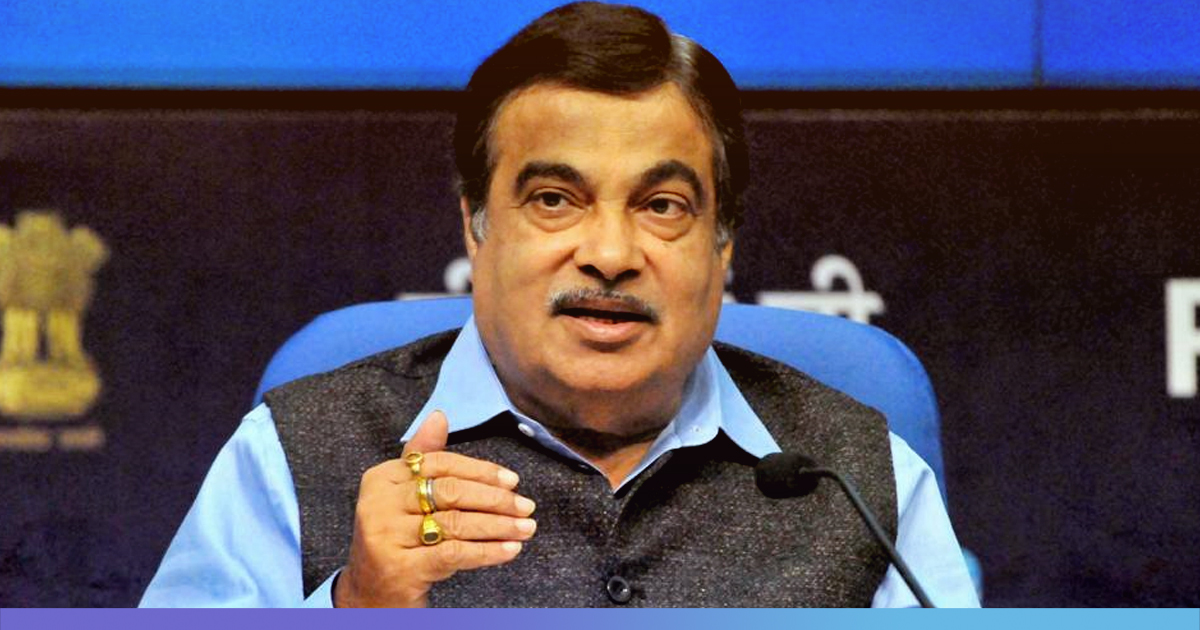
Rs 50-60 lakh crore foreign investment is needed in the country - Nitin Gadkari


NEW DELHI: India needs foreign direct investments worth Rs 50 to 60 lakh crore and the money can be tapped mainly through infrastructure projects as well as MSME sector to accelerate the wheels of coronavirus-hit economy, according to Union minister Nitin Gadkari.

Emphasising that at this juncture Foreign Direct Investment (FDI) is the need of the hour, the senior minister said such funds would benefit the country as there is a need for pumping in liquidity into the market.


"Country at this juncture needs liquidity. Without liquidity our economy's wheel will not accelerate... Rs 50-60 lakh crore foreign investment is needed in the country under present circumstances to boost the economy," the Road Transport, Highways and MSME Minister told PTI in an interview.

Infrastructure sector including highways, airports, inland waterways, railways, logistic parks, broad gauge and metro, apart from Micro, Small and Medium Enterprises can attract large scale foreign investment, he noted.

Gadkari further said that talks are on with investors from Dubai and the US for various sectors, including MSMEs.

"Some MSMEs are already listed on the BSE. I have talked to investors in Dubai and the US to come and invest in such MSMEs based on their three-year turnover, GST track record, IT record and good rating. Investing in these can result in rich dividends as these do exports also," he said.


Besides, the minister said that 22 green highways were being build, including the Rs 1 lakh crore Delhi-Mumbai Expressway on a new alignment.

PTI

Wednesday, 24 June 2020

Bajaj Finance Launches Online Fixed Deposit for New Customers

Bajaj Finance Limited, the lending & investment arm of Bajaj Finserv and one of the most diversified NBFCs in the Indian market, has now launched online Fixed Deposit facility for customers. Using this convenience, new and existing customers can invest in Bajaj Finance FD from the comfort of their homes.

Servicing more than 2.5 lakh happy FD customers with a deposit book of more than 20,000 crores, Bajaj Finance Fixed Deposit is a preferred investment option, owing to its assurance of lucrative returns.

Despite recent repo rate cuts and reduction in interest rates, Bajaj Finance is offering lucrative FD interest rates of up to 7.85%, which are one of the highest in the market. These high returns don't come at the cost of stability or convenience, as deposits by Bajaj Finance are accredited with the highest ratings of FAAA by CRISIL and MAAA by ICRA. Along with these high ratings, Bajaj Finance is also one of the only NBFCs to have '0 unclaimed deposits' - which indicates the measures taken by this company to ensure safety of depositors' money.

Benefits of availing online FD facility

In today's times of high market volatility and falling interest rate regime, customers can lock into the prevailing high FD interest rates by filling Bajaj Finance online FD form and reap these benefits:

• Quick online process: When investing in this online FD, investors need not worry about visiting Bajaj Finance branches, as this end-to-end online process enables them to book an FD immediately, without any hassle.


• Easy online and paperless process: With this online FD facility, customers can carry out the entire process online, from start to finish. This saves them the trouble of multiple visits to branches or the need to submit documentation. While existing FD customers need not even submit their documents again, new customers can verify themselves through the cKYC repository, and complete the documentation process without any hassle.

• Invest anytime, anywhere: Bajaj Finance online FD facility also enables investors to invest from any device with an internet connection. This offers them with the flexibility to invest in a Fixed Deposit from their office desk, or from their homes.

Apart from the convenience of investing online through a paperless process, investors can choose to auto-renew their deposits and reap the benefits of multi-deposit facility or avail a Loan against Fixed Deposit. Amid falling interest rates and increasing market volatilities, it is best to lock into this Fixed Deposit offering one of the best FD interest rates.

Additionally, for those looking to determine their returns online, Bajaj Finance FD interest calculator can be a great way to determine maturity amount, interest payouts and maturity date before they invest.